
Granite glue for stone restoration

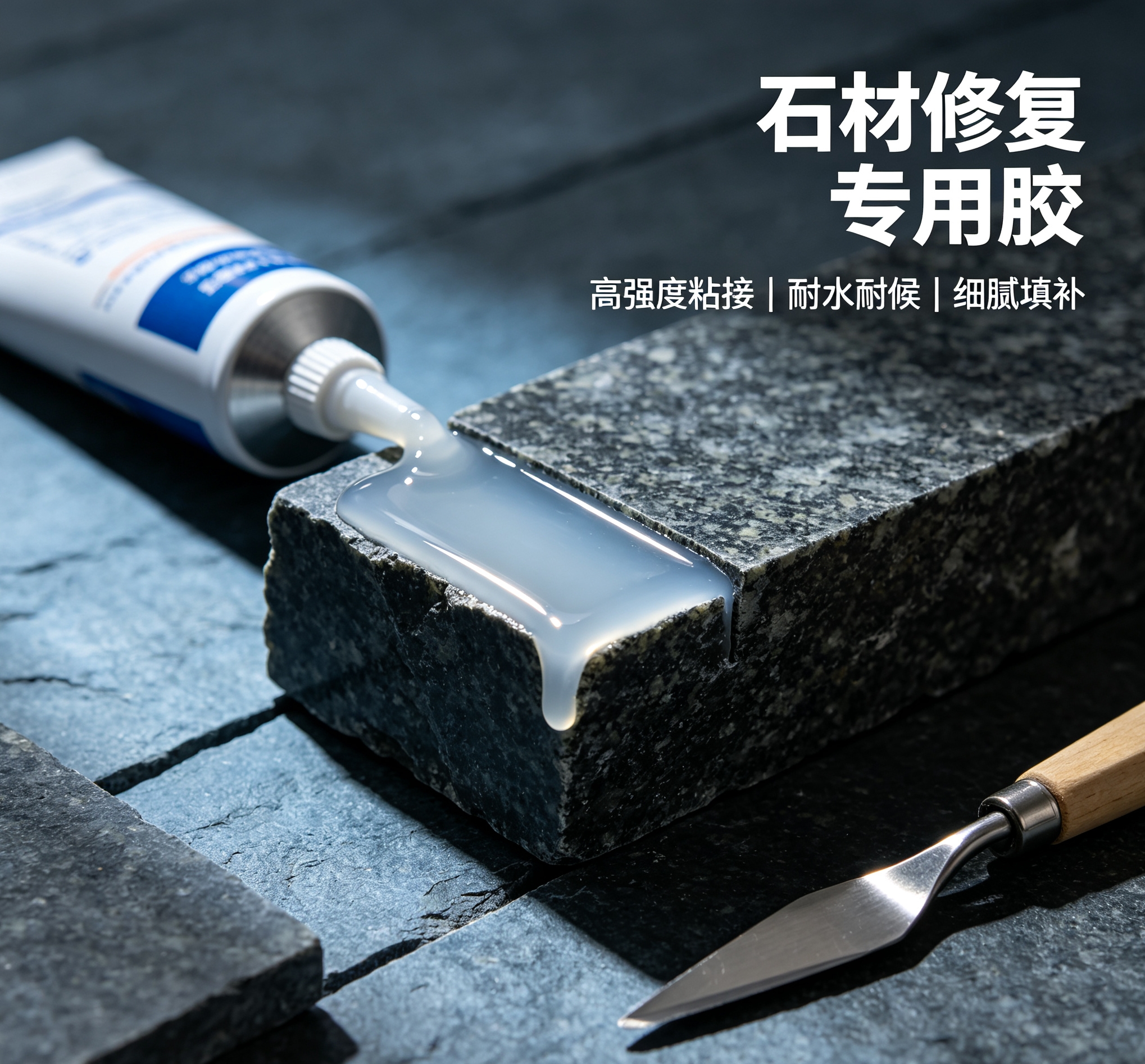
Granite Bonding Agent for Stone Restoration: Types, Usage, Selection, and Professional Guidance
Granite restoration needs specialized stone adhesives for fixing any defects like bubbles, chips and fractures while not compromising with the stone’s natural characteristics. The designated glue must have different attributes compared to regular home glue in order to cope up with the granite’s densified nature and withstand external impacts. Hence, the right bonding agent provides an important impact on both quality and texture of granite restorations at residential and commercial establishments. This article gives a concise description of the types of granite bonding agents on the market as well as their respective usages.
Main Types of Professional Granite Bonding Agents
There are three leading types of granite bonding agents which are applied in various cases:
1. Epoxy Granite Bonding Agent
This is the most effective and reliable adhesive consisting of two components: epoxy resin (part A) and hardener (part B). Upon mixing these parts together according to the instruction, the adhesive becomes strong enough to be used in various applications, having high resistance to multiple impacts. Most formulations contain colorless bonding agents for achieving the best aesthetic properties of the adhesive.
Most suitable for: the application of heavy-duty granite bonding agents including kitchen and table surfaces made of granite.
Advantages: waterproof, can withstand high temperate influences, heat and ultraviolet rays.The cured resin can be polished for a finish matching the original granite surface perfectly.
Best suited for: Shallow scratches, small holes, minor chips, and temporary positioning of stones.
Disadvantage: It does not provide the same structural strength as epoxy and is not suitable for heavy-load structural repairs.
Cyanoacrylate Instant Stone Adhesive
This low-viscosity adhesive can fill in the smallest gaps and cure instantly. It does not leave any unwanted traces and maintains the original quality of the granite.
Best for: Hairline cracks, small edge chips, and final seams.
Drawback: It does not have enough tensile strength for heavy-duty repairs and can be used only for beautiful micro-repairs.
Glue Selection Process
Bad glue selection leads to yellowing, debonding, and uneven surface. Selection criteria include:
1. Structural match: Two-component epoxy resin is required for repair work on structural items (crack splicing, slab joining), while polyester or instant glue is sufficient for cosmetic superficial repair.
2. Color stability: High-quality glue with light stabilizers will resist oxidation and yellowing. Clear anti-yellowing compounds are essential for white/light granite in order not to make the color different.
3. Resistance to outer influences: Indoor granite needs adhesive that is waterproof, oil-resistant, and heat-resistant; outside granite needs UV and weather-resistant adhesive so that it would not age and debond.
4. Low shrinkage & polishability: Good quality glue shrinks little, and can be buffed and polished to produce smooth effect.Prepare the surface by ensuring it is fully clean and dry. Use air blower for cleaning.
The next step consists of proper epoxy mixing (2-part epoxy). The mix must be performed exactly according to the manufacturer prescribing pyramid ratio of 2:1 or 1:1. You should mix both components for 2–3 minutes thoroughly mixing them.
After mixing epoxy components both of them need to be used for filling the surface. Begin filling from the bottom of the cracks and holes in order to avoid air bubbles. You should apply thin layer of glue onto the surfaces of bonded objects, joining them and pressing so that the glue sticks, and removing any surplus of glue.
Then go to curing phase, which should be made in a dry and safe for dust environment. It will take about 30–60 minutes for glue fixing and full curing will be achieved after 24+hours. You should not touch or move parts during the curing process.
There are several common mistakes people usually make while gluing their granite surfaces. One of the most mistakes is selection of wrong type of glue leading to bad performance of repair. Then, there are cases when mixture is not prepared according to an established ratio resulting in poor quality and adherence.
To prolong the life of the granite surface it will be essential to remind yourself about the main post-repair recommendations. You must avoid any contact with water, allowing it to be dry for at least 72 hours. Avoid placing hot pots or pans on the countertop and using of harsh acid cleaners.
So, if you consider the correct choice of glue according to granite surface types you will solve the problem with reliable restoration.