
Clear epoxy for marble repair

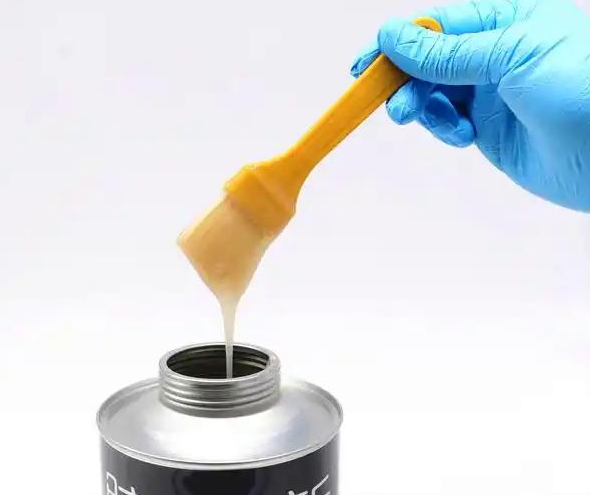
Application and Professional Guidelines of Clear Epoxy Resin in Marble Restoration
As a high-grade natural decorative material, marble is widely used in building decoration, countertop fabrication, artwork display and other scenarios due to its gentle texture and elegant finish. However, its natural properties, combined with external impacts, temperature variations, foundation settlement and other factors during service, are prone to causing damages such as cracks, chips and fractures on marble surfaces. Clear epoxy resin has emerged as the core material for professional marble restoration, thanks to its superior bonding strength, low shrinkage rate, high transparency and weather resistance. It can restore the structural integrity of stone materials while maximizing the retention of their natural aesthetic appeal. This paper systematically elaborates on the application essentials of clear epoxy resin in marble restoration from the aspects of product characteristics, selection skills, construction procedures and precautions.
1. Core Advantages of Clear Epoxy Resin for Marble Restoration
Marble is mainly composed of calcium carbonate, featuring high density, low porosity, strong chemical sensitivity, and high hardness yet brittleness. These properties impose stringent requirements on the compatibility, strength and stability of restoration materials. Compared with traditional materials such as marble adhesive and polyurethane adhesive, clear epoxy resin demonstrates irreplaceable advantages in marble restoration:
Superior structural bonding capacity: The shear strength of cured two-component clear epoxy resin can reach 20–30 MPa, far exceeding the inherent strength of marble itself. It can effectively repair structural defects such as through fractures and damages on load-bearing parts, ensuring that the restored stone can withstand its own weight and daily external impacts. The network structure formed after curing can penetrate into the fine gaps of the stone, achieving a restoration effect of “reinforcement rather than concealment”.
High transparency and aesthetic compatibility: High-quality clear epoxy resin becomes crystal clear after curing without yellowing risk, which can perfectly integrate with the natural texture of marble and avoid obtrusive repair marks. Meanwhile, it supports the addition of natural mineral colorants for color adjustment to meet the restoration needs of marbles with different patterns and colors, especially suitable for light-colored precious stones such as Carrara White.
Excellent weather and corrosion resistance: After curing, it can withstand temperature variations ranging from -50℃ to 120℃, exhibiting good water resistance, damp-heat resistance and atmospheric aging resistance. It also has acid and alkali corrosion resistance (direct contact with strong acids should be avoided), which can meet the restoration requirements of various indoor and outdoor scenarios, with a service life much longer than that of ordinary marble adhesive.
Low shrinkage and high stability: It has an extremely low curing shrinkage rate, which can effectively prevent secondary cracking caused by adhesive shrinkage after restoration, ensuring tight bonding between the repaired area and the stone matrix, and avoiding falling off or cracking during long-term use. Some solvent-free products also possess environmental protection properties, complying with the EU RoHS Directive, making them suitable for indoor decoration scenarios.
2. Selection Guidelines for Clear Epoxy Resin
Marble restoration scenarios are diverse, including fine cracks, deep fractures, complete breaks and countertop splicing. It is necessary to select suitable clear epoxy resin products according to the damage type, service environment and construction requirements to avoid compromising the restoration effect due to improper selection.
2.1 Selection by Viscosity Category
Viscosity is the core parameter determining the penetration ability and filling effect of epoxy resin, which should be selected based on the damage degree:
Low-viscosity type (30–400 cps): Suitable for penetration reinforcement of minor damages such as shallow fine lines and chicken foot cracks. Its strong fluidity allows it to autonomously penetrate into the internal gaps of the stone, forming a deep reinforcement layer to prevent further expansion of cracks.
Medium-viscosity type (500–2500 cps): Highly versatile, applicable for filling medium-width cracks (0.1–1 cm), chips and stone splicing. It has a moderate curing time (7–24 hours at room temperature), balancing penetration and filling performance with a high operational error tolerance, making it suitable for both professional construction and DIY restoration scenarios.
High-viscosity type (above 3000 cps): Gel-like in consistency, ideal for repairing completely broken marble, splicing large damaged pieces and restoring load-bearing parts. It boasts extremely high bonding strength, reaching a hardness of 95 Shore D after curing, and can withstand substantial gravity and impact forces. However, it has poor fluidity and requires manual compaction for filling, making it suitable for structural restoration needs.
2.2 Selection by Curing Condition Category
Room-temperature curing type: No additional heating is required; it can cure naturally at around 25℃, featuring simple operation and suitability for most indoor restoration scenarios. The curing time is usually 8–24 hours, suitable for situations without special construction conditions, with high cost-effectiveness.
Heat-curing type: Requires curing at 50–60℃ for 2–3 hours. After curing, it has higher hardness and wear resistance, making it suitable for scenarios with extremely high strength requirements for restoration, such as marble countertops and artworks. Attention should be paid to controlling the curing temperature and time to avoid bubble generation due to excessively high temperatures.
2.3 Core Indicators of High-quality Products
The following indicators should be prioritized during selection: shear strength ≥ 20 MPa, hardness after curing ≥ 80 Shore D, UV stability (no yellowing), environmental certification (e.g., RoHS) and shelf life (usually 6 months).
3. Professional Construction Procedures for Marble Restoration with Clear Epoxy Resin
Construction quality directly determines the durability and aesthetics of the restoration effect. It is necessary to strictly follow the process of “cleaning – treatment – adhesive mixing – filling – curing – grinding and polishing”, and adjust the operation details according to different damage types.
3.1 Pre-construction Preparation and Surface Treatment
Surface treatment is the key to ensuring firm bonding. Dust, oil stains, moisture and loose debris at the damaged area must be thoroughly removed:
Fine cracks: Clean the dust inside the cracks with a vacuum cleaner, then wipe the surrounding area with alcohol to ensure the surface is dry and free of residues; use a hair dryer at low temperature to dry if necessary.
Deep cracks and chips: Install a thin cutting blade on an angle grinder to cut a “V”-shaped groove along the crack to expand the bonding area, then thoroughly clean the groove with a vacuum cleaner and alcohol to remove dust and oil stains.
Complete fractures: Grind all fractured surfaces to a rough finish, remove slag and the glossy layer to enhance adhesive adhesion; after cleaning, ensure the fractured surfaces are completely dry without moisture residue.
3.2 Key Points of Adhesive Mixing Operation
Most clear epoxy resins are two-component (Agent A: resin + Agent B: curing agent), which must be mixed strictly according to the product instructions (common mixing ratios are 3:1, 4:1 or 2:1 by weight priority) to avoid incomplete curing, insufficient hardness or yellowing caused by unbalanced ratios:
Mixing tools must be clean and dry without oil stains or moisture residues; disposable containers and stirring rods are recommended.
Stir slowly in the same direction for 3–5 minutes to ensure complete fusion of the two components while minimizing bubble generation. If bubbles appear, let the mixture stand for 1–2 minutes to allow bubbles to float up, or sweep with a heat gun at a 45° angle to eliminate bubbles; vacuum degassing chambers can be used for high-end restoration projects.
If color adjustment is needed, add a small amount of natural mineral colorant after thorough mixing, adjusting the color to be slightly lighter than the base color of the marble to avoid obvious marks due to excessive darkening after curing.
The amount of mixed adhesive should be controlled according to the construction progress. The pot life at room temperature is usually 15–30 minutes for a 100g mixture to avoid waste caused by premature curing of the adhesive.
3.3 Filling and Curing
Filling: For fine cracks, adopt a brushing method, applying multiple coats to allow the adhesive to fully penetrate; for “V”-shaped grooves and chips, use a glue injector or scraper for compaction and filling, ensuring the adhesive completely fills the gaps and is slightly higher than the stone surface (reserving allowance for grinding); for complete fractures, evenly apply the adhesive on the fractured surfaces, align the splicing positions and squeeze firmly to allow the adhesive to overflow, ensuring no internal voids.
Fixing: After splicing and restoration, use clamps or heavy objects for fixation to prevent displacement; the fixing time should be at least half of the curing time (24 hours or more is recommended for room-temperature curing).
Curing: For room-temperature curing, maintain a clean and dry environment with the temperature controlled at 20–25℃ to avoid compromised curing effect due to excessive temperature fluctuations; for heat curing, strictly follow the product instructions to control temperature and time, and prohibit touching or moving the stone during curing. The full curing time is usually 24–48 hours; for load-bearing parts, it is recommended to extend the curing period to 72 hours.
3.4 Grinding and Polishing
After full curing, grinding and polishing are required to restore the flatness and glossiness of the stone surface:
Preliminary grinding: Use a sharp putty knife to scrape off the protruding adhesive on the surface, then use a hand grinder equipped with water grinding pads to perform gradual grinding from coarse grit (50#) to fine grit (3000#), ensuring the repaired area is flush with the stone matrix without height differences.
Fine polishing: Use stone polishing agent and polish at low speed with a polishing machine until the glossiness of the repaired area matches that of the surrounding stone, avoiding grinding marks or color differences. Pay attention to controlling the pressure during polishing to prevent overheating and damage to the stone surface.
4. Construction Precautions and Pitfall Avoidance Guidelines
4.1 Core Precautions
Safety protection: Wear gloves, masks and goggles during construction to avoid skin contact with the adhesive or inhalation of volatile substances; if the adhesive comes into contact with the skin, immediately wipe it with acetone or alcohol and then rinse with clean water.
Environmental control: The construction and curing environment should be dry and well-ventilated with humidity controlled below 60% to avoid bubble generation or bonding failure after curing due to humid conditions; construction in high-temperature, direct sunlight or low-temperature environments is prohibited.
Adhesive storage: Store in a sealed container in a cool and well-ventilated place, avoiding high temperature and direct sunlight, and use within the shelf life; if crystallization occurs at low temperatures in winter, it can be melted in an oven at 60℃ before use, and a small-scale test should be conducted first to verify its performance.
Structural assessment: If a marble slab has large-area cracks or multiple stones cracking in the same direction, it may be caused by structural problems such as foundation settlement. The root cause should be addressed first before restoration to prevent recurrence of cracks.
4.2 Common Pitfall Avoidance
Pitfall 1: Using marble adhesive instead of clear epoxy resin for structural restoration. Marble adhesive cures quickly but has poor weather resistance and insufficient strength, making it only suitable for small-scale temporary repairs. It is prone to aging and cracking during long-term use and cannot meet the requirements of load-bearing and structural restoration.
Pitfall 2: Ignoring the adhesive curing time and conducting grinding prematurely. Incomplete curing will lead to surface sanding and insufficient hardness after grinding; it is necessary to strictly follow the curing time requirements, and extend the curing period if necessary.
Pitfall 3: Pursuing “completely invisible” restoration. Natural marble has unique textures, and subtle traces may be visible at specific light angles after restoration. A reasonable expectation should be “no obvious traces from normal viewing angles”, with priority given to ensuring structural stability.
Pitfall 4: Choosing inferior products for cost savings. Low-cost epoxy resins may contain fillers, which are prone to yellowing and cracking after curing. It is recommended to select products that comply with industry standards and have brand guarantees, especially for precious marble materials.
5. Conclusion
With its outstanding bonding strength, transparency and stability, clear epoxy resin has become the preferred material in the field of marble restoration. The core of its application lies in “selecting the right product + standardized construction”. Whether for penetration reinforcement of fine cracks, splicing restoration of broken stone, or seamless filling of countertops, it is necessary to accurately select products based on damage types and service scenarios, strictly follow the construction procedures, and avoid common pitfalls. For precious marble or complex restoration scenarios, it is advisable to hire professional stone maintenance teams to balance restoration effect and stone value. Through the scientific application of clear epoxy resin, the service life of marble can be effectively extended, and the elegant texture of this natural stone material can be preserved for a long time.