
Marble adhesive manufacturer

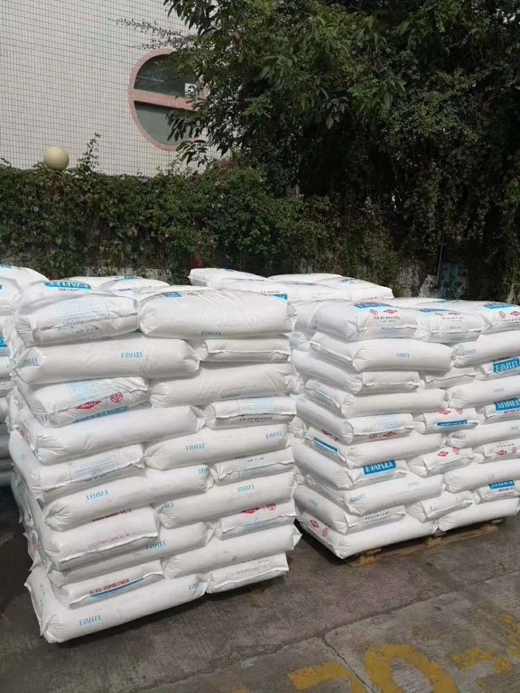
In the modern architectural decoration and stone processing industries, marble has become the preferred material for high-end decoration, landscape engineering, and artwork creation due to its unique texture, elegant texture, and excellent physical properties. As a key supporting product for bonding and fixing marble, the quality and performance of marble adhesive directly determine the safety, stability, and aesthetics of stone applications. Marble adhesive manufacturers play an indispensable core role in this industrial chain, providing solid technical support and product guarantees for industry development.
I. Core Positioning and Responsibilities of Marble Adhesive Manufacturers
Marble adhesive manufacturers are not simply “production-oriented enterprises” but comprehensive solution providers integrating technology research and development (R&D), precise production, quality control, and application services. Their core responsibilities run through the entire product lifecycle, specifically reflected in the following dimensions:
(1) Product R&D Based on Application Scenarios
Different stone application scenarios have significant differences in performance requirements for marble adhesive. For example, marble tiling on interior walls requires focusing on the adhesive strength and anti-shrinkage properties of the adhesive to avoid hollowing and falling off in the later stage; outdoor landscape engineering (such as marble flooring and sculpture splicing) has extremely high requirements for weather resistance, water resistance, and anti-ultraviolet aging performance; and for marble artwork restoration scenarios, it is also necessary to consider the transparency, color difference control, and reversibility of the adhesive (to facilitate secondary restoration in the later stage).
Professional marble adhesive manufacturers need to establish dedicated R&D teams, conduct in-depth research on the needs of different fields such as architectural decoration, stone processing, and cultural relic restoration. By adjusting the formulas of core base materials such as epoxy resin, unsaturated polyester resin, and modified acrylate, and optimizing the proportion of curing agents, accelerators, and fillers, they develop targeted products. For instance, to meet the tiling needs of large-sized marble slabs (e.g., thickness exceeding 30mm and area exceeding 2㎡), they develop heavy-duty stone adhesives with high toughness and low shrinkage to solve the problem of slab cracking caused by excessive shrinkage of traditional adhesives; for food contact scenarios (such as marble dining table splicing), they launch environmentally friendly adhesives that comply with national food safety standards (GB 4806.10), ensuring that the release of harmful substances (such as formaldehyde and benzene compounds) is below the limit.
(2) Strict Whole-Process Quality Control
The quality of marble adhesive is directly related to building safety and user health, so quality control is one of the core competencies of manufacturers. Formal manufacturers usually establish a full-process quality inspection system from “raw material procurement” to “finished product delivery”:
Raw material screening: Conduct batch testing on core raw materials such as resins, curing agents, and fillers to ensure their purity and stability meet the enterprise’s internal control standards, and refuse to use recycled or inferior raw materials.
Production process monitoring: Adopt automated mixing and metering equipment to reduce human errors, and simultaneously monitor key parameters such as mixing temperature and stirring speed in real time to avoid unstable product performance caused by process fluctuations.
Finished product testing: Each batch of products must undergo multiple index tests such as bonding strength, curing time, water and temperature resistance, and VOC content. Only products that meet all standards can leave the factory, and samples are retained for subsequent traceability.
(3) Customized Services and Technical Support
With the diversification of stone application scenarios, standardized products can hardly meet all needs. Therefore, providing customized services has become an important competitive advantage for high-end marble adhesive manufacturers. Manufacturers can adjust product formulas and develop exclusive solutions according to customers’ specific needs (such as special stone types, extreme usage environments, and personalized curing speeds). For example, for marble tiling projects in alpine regions (winter temperatures below -20℃), they customize low-temperature curing adhesives to ensure normal curing and sufficient bonding strength even in low-temperature environments; to meet the bonding needs of ultra-thin marble slabs (thickness less than 5mm), they develop low-viscosity and high-permeability adhesives to avoid slab deformation caused by adhesive shrinkage.
In addition, professional manufacturers also need to provide supporting technical support, such as on-site training for construction teams (guiding adhesive mixing ratios, construction processes, maintenance requirements, etc.), assisting in solving problems encountered during construction (such as hollowing and degumming), and even participating in the early-stage project design to ensure that the adhesive selection is highly matched with the application scenario.
II. Industry Trends and Challenges Faced by Marble Adhesive Manufacturers
Currently, with the transformation of the construction industry towards “greenization, intellectualization, and high-endization” and the improvement of consumers’ demands for environmental protection and safety, marble adhesive manufacturers are facing new development opportunities and challenges:
(1) Tighter Environmental Policies Promote Product Upgrading
In recent years, the state has continuously raised environmental protection requirements for building materials. Standards such as “Limits of Harmful Substances in Adhesives for Indoor Decoration and Renovation Materials” (GB 18583-2008) have set strict limits on indicators such as VOC content, formaldehyde emission, and benzene compound content of adhesives. At the same time, various localities have introduced policies related to “green buildings” and “zero-carbon buildings” to promote the application of low-pollution and low-energy-consuming materials. This trend has forced manufacturers to accelerate product upgrading, transforming from traditional solvent-based adhesives to water-based and solvent-free adhesives. For example, some leading manufacturers have launched water-based epoxy resin marble adhesives, whose VOC content is below 50g/L, far lower than the national standard limit, while maintaining excellent bonding performance to meet the needs of green buildings. However, product upgrading also faces challenges, such as high R&D costs and more complex production processes for water-based adhesives, and the water resistance and weather resistance of some water-based adhesives still need to be further improved, requiring manufacturers to invest more R&D resources.
(2) Intelligent Production Improves Efficiency and Quality Stability
With the popularization of Industry 4.0 technology, intelligent production has become an important direction for the upgrading of the manufacturing industry. For marble adhesive manufacturers, the introduction of intelligent equipment (such as fully automatic batching systems, online detection equipment, and MES production management systems) can significantly improve production efficiency and quality stability:
The fully automatic batching system can realize precise measurement of raw materials (error less than 0.1%), avoiding formula deviations caused by manual batching.
Online detection equipment can monitor indicators such as product viscosity and solid content in real time, adjust production parameters in a timely manner, and reduce the generation of defective products.
The MES system can realize full-process traceability of the production process. Information from raw material batches to production personnel and equipment can be quickly queried, facilitating quality problem investigation and management optimization.
However, intelligent transformation requires a large amount of capital investment. For small and medium-sized manufacturers, how to balance investment and return is a key challenge.
(3) Intensified Market Competition and the Need for Brand Development
With the continuous expansion of the marble adhesive market, the number of enterprises in the industry has gradually increased, and market competition has become increasingly fierce. Currently, the market includes both internationally renowned brands (such as Henkel and Sika) and a large number of local small and medium-sized manufacturers. Some small enterprises use inferior raw materials to produce low-priced products to reduce costs, leading to a “low-price competition” chaos in the market. This not only disrupts the market order but also affects consumers’ trust in marble adhesive products.
Against this background, formal manufacturers need to strengthen brand building, establish a “professional and reliable” brand image by improving product quality, providing high-quality services, and enhancing environmental protection attributes, to form differentiated competition with inferior products. At the same time, they also need to expand market channels, such as establishing long-term cooperative relationships with large construction enterprises and stone processing manufacturers, and participating in the bidding of large-scale engineering projects to improve brand awareness and market share.
III. How to Select a High-Quality Marble Adhesive Manufacturer?
For downstream customers such as construction enterprises and stone processing manufacturers, selecting a high-quality marble adhesive manufacturer is crucial to ensuring project quality. When making a selection, evaluation can be conducted from the following dimensions:
Qualifications and certifications: Check whether the manufacturer has production qualifications (such as an Industrial Product Production License), whether the products have passed testing by national authoritative institutions (such as CMA and CNAS certification reports), and whether they comply with relevant national standards and environmental protection requirements.
R&D and production capabilities: Understand whether the manufacturer has a professional R&D team and the ability to provide customized services, whether the production equipment is advanced, and whether a complete quality control system has been established.
Market reputation and cases: Evaluate the manufacturer’s strength and reliability through industry reputation, customer reviews, and past cooperation cases (such as whether it has participated in large-scale landmark projects such as airports, hotels, and museums).
Technical support and after-sales service: Investigate whether the manufacturer provides supporting technical support (such as construction training and on-site guidance) and whether the after-sales service is timely (such as whether quality problems can be quickly responded to and resolved).
IV. Conclusion
As a core link in the stone application industrial chain, the product quality and technical level of marble adhesive manufacturers directly affect the safety, aesthetics, and durability of architectural decoration. Against the background of the industry’s transformation towards greenization and intellectualization, manufacturers need to take technology R&D as the core, quality control as the foundation, and customized services as the support, continuously promoting product upgrading and service optimization to gain a foothold in the fierce market competition, while contributing to the high-quality development of the construction industry. For downstream customers, selecting a professional and reliable manufacturer is the key to ensuring project quality and reducing risks, and it is also an important measure to promote the healthy development of the entire industry.
I can further optimize the translation of specific sections (such as technical terms or complex sentences) according to your needs. Do you want me to refine the translation of a certain part, like the “product R&D” or “quality control” section?