
Marble glue for hairline cracks

Marble Hairline Crack Repair Adhesive: A Comprehensive Guide to Selection, Application and Maintenance
Marble is favored for its naturally elegant texture, unique veining, and timeless decorative appeal. However, it is prone to developing hairline cracks due to various factors such as material inherent structural characteristics, external impact, or improper maintenance. Although these fine cracks do not immediately compromise structural stability, they will gradually deteriorate over time, allowing moisture, dirt, and chemical substances to penetrate the stone interior, thereby damaging the texture and appearance of marble. Therefore, selecting a suitable marble repair adhesive and adopting standardized repair techniques are crucial to restoring the decorative and functional properties of the stone. This article provides a detailed elaboration on marble hairline crack repair adhesives, covering core aspects such as product types, selection criteria, construction processes, quality control, and preventive maintenance.
1. Types of Repair Adhesives Suitable for Marble Hairline Cracks
Marble hairline cracks are typically narrow and shallow (with a width of less than 1 mm), thus imposing high requirements on the permeability, bonding strength, transparency, and color-matching adaptability of repair adhesives. The following are the most widely used and effective types of repair adhesives at present:
1.1 Epoxy Resin Adhesive
Epoxy resin adhesive is a two-component adhesive consisting of resin and curing agent, and is regarded as the gold standard material for repairing marble hairline cracks. This type of adhesive boasts excellent bonding strength, chemical resistance (resistant to acid, alkali, and solvent erosion), and waterproof performance, ensuring the long-term stability of the repaired layer. Its low viscosity enables it to deeply penetrate into narrow hairline cracks, achieving complete filling of the gaps. In addition, epoxy resin adhesive can be mixed with marble powder or colorants to precisely match the color and texture of the original stone, realizing a seamless repair effect. It is suitable for various indoor and outdoor marble paving scenarios, including high-traffic areas and humid environments such as kitchens and bathrooms. The curing time of epoxy resin adhesive varies depending on the formulation, ranging from 2 to 24 hours; generally, the longer the curing time, the higher the bonding strength.
1.2 Polyurethane Adhesive
Polyurethane adhesive is a type of adhesive with both flexibility and wear resistance, suitable for repairing marble hairline cracks in scenarios where there is slight structural displacement or temperature fluctuation. Compared with epoxy resin adhesive, polyurethane adhesive has a shorter curing time (usually 1 to 6 hours), making it more suitable for construction projects with tight schedules. It features excellent waterproof performance, can adapt to minor expansion and contraction deformation of the marble base layer, and reduces the risk of re-cracking after repair. However, the transparency of polyurethane adhesive is slightly inferior to that of epoxy resin adhesive, so it is more applicable to scenarios with low color-matching requirements or repair projects of dark-colored marble.
1.3 Acrylate Adhesive
Acrylate adhesive is a high-performance water-based adhesive with outstanding transparency and UV resistance. Its core advantage lies in its excellent decorative repair effect, so it is particularly suitable for repairing hairline cracks on marble decorative ornaments, exhibition exhibits, or light-colored marble surfaces. This adhesive has a fast curing speed (curing within 30 minutes to 2 hours), and the adhesive layer formed after curing has flexibility and is not prone to yellowing when exposed to sunlight for a long time. However, the bonding strength and chemical resistance of acrylate adhesive are lower than those of epoxy resin adhesive, so it is not recommended for marble repair under high-load or harsh environments.
1.4 Modified Cement-based Adhesive
Modified cement-based adhesive improves its performance by incorporating polymer modifiers, and has both good durability and economy. It is suitable for marble paving scenarios with structural load-bearing requirements, such as repairing hairline cracks on marble floor tiles. However, its permeability is limited, resulting in poor repair effect on extremely narrow hairline cracks; at the same time, strict control of mixing and application processes is required during construction to avoid new cracks caused by shrinkage during curing. Due to its low transparency, modified cement-based adhesive is mostly used for repairing non-decorative or concealed parts of marble.
2. Core Selection Criteria for Marble Hairline Crack Repair Adhesives
Selecting a suitable repair adhesive requires comprehensive consideration of various factors to ensure the effectiveness, durability, and aesthetics of the repair effect. The following are the core selection criteria:
2.1 Bonding Strength
Repair adhesives for hairline cracks need to have sufficient bonding strength to withstand the effects of daily use, temperature changes, and slight structural displacement. Epoxy resin adhesive usually has the highest bonding strength (exceeding 3.0 MPa), making it suitable for most repair scenarios. When selecting, it is necessary to refer to the product technical parameters to ensure that its tensile bonding strength meets or exceeds relevant domestic and international standards (e.g., the European standard stipulates that the tensile bonding strength of C2-grade adhesives is ≥ 1.0 MPa).
2.2 Penetration Ability
Due to the narrow gap of hairline cracks, the repair adhesive needs to have low viscosity to deeply penetrate into the cracks and completely fill the gaps. Low-viscosity epoxy resin adhesive with a viscosity value in the range of 50–200 mPa·s is an ideal choice for such scenarios, as it can flow into fine cracks without applying excessive pressure. High-viscosity adhesives should be avoided, as they can only cover the surface of the cracks and cannot achieve deep bonding.
2.3 Transparency and Color-matching Adaptability
To achieve a seamless repair effect, the repair adhesive should have high transparency, or can precisely match the color and texture of marble through color adjustment. For light-colored marble or scenarios with high decorative requirements, epoxy resin adhesive and acrylate adhesive are preferred materials. At present, most manufacturers provide matching color adjustment kits, including marble powder and colorants, which can be mixed with the adhesive to restore the original appearance of the stone.
2.4 Environmental Adaptability
The selection should be based on the service environment of the marble: for marble paved in humid areas such as bathrooms and kitchens or outdoors, adhesives with excellent waterproof and weather resistance (such as epoxy resin adhesive and polyurethane adhesive) should be selected; for marble exposed to direct sunlight for a long time, UV-resistant adhesives (such as acrylate adhesive and UV-curable epoxy resin adhesive) should be selected to prevent yellowing and aging of the adhesive layer; in cold regions, adhesives that can cure at low temperatures (such as winter-specific polyurethane adhesive added with anti-freezing additives) should be selected.
2.5 Environmental Performance
Priority should be given to adhesives with low volatile organic compounds (low VOC) or zero VOC to ensure indoor air quality. When selecting, attention can be paid to whether the product has obtained authoritative environmental certifications, such as China’s Ten-Ring Certification, France’s A+ Certification, and Germany’s GEV EC1PLUS Certification, which indicate that the product meets stringent environmental and health standards.
3. Step-by-Step Construction Process for Marble Hairline Crack Repair Adhesives
Standardized construction operations are the key to ensuring successful repair. The following is the detailed process for repairing marble hairline cracks:
3.1 Construction Preparation
First, thoroughly clean the cracks and surrounding areas to remove dust, dirt, oil stains, and moisture. A soft-bristled brush, vacuum cleaner, or compressed air can be used to clean the debris inside the cracks; if there are oil stains, a neutral professional stone cleaner (avoid acidic or alkaline cleaners that may damage the stone) should be used for wiping, followed by drying with a clean cloth. The cracks must be completely dry before proceeding to the next step, otherwise, moisture will seriously affect the bonding performance of the adhesive. Meanwhile, prepare the required tools and materials, including marble repair adhesive, mixing container, mixing stick, colorant (if needed), putty knife, scraper, sandpaper of different grits (100-grit, 220-grit, 360-grit, 800-grit), and stone polishing agent.
3.2 Adhesive Mixing (for Two-component Adhesives Only)
If using two-component adhesives such as epoxy resin adhesive and polyurethane adhesive, mix the resin and curing agent strictly in accordance with the ratio specified by the manufacturer (usually 10:1 or 5:1 by mass or volume). Stir the two components thoroughly for 2–3 minutes to ensure uniform mixing, and pay attention to avoiding air bubbles during the stirring process. If color adjustment is needed, add a small amount of colorant or marble powder to the mixed adhesive and stir until the target color is achieved.
3.3 Adhesive Application
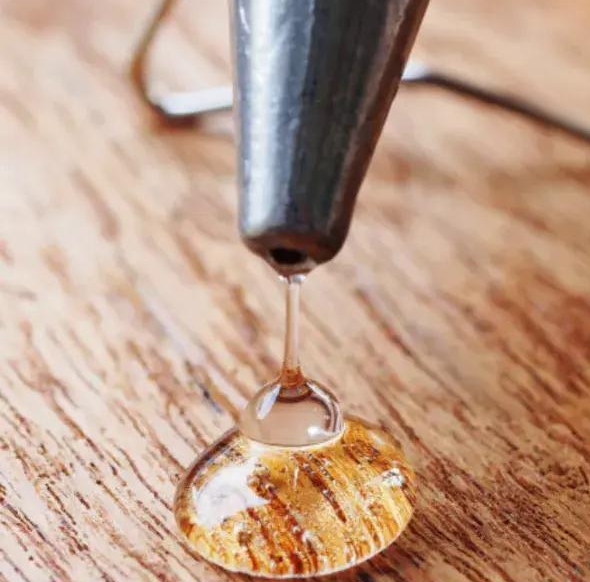
Use a small brush, syringe, or putty knife to inject the mixed adhesive into the hairline cracks. For extremely narrow cracks, a syringe is the best application tool, which can achieve precise glue injection and ensure that the adhesive deeply penetrates into the cracks. The adhesive should be applied evenly to ensure complete filling of the cracks; for slightly wider hairline cracks, a thin layer of adhesive can be applied on both sides of the cracks, and then the stone can be gently pressed to promote adhesive penetration. Before the adhesive starts to cure, use a damp cloth or scraper to promptly clean the excess adhesive on the stone surface, as forcibly removing the cured adhesive is likely to damage the marble surface.
3.4 Curing and Maintenance
Place the repaired stone in a clean, dry, and room-temperature environment for maintenance, and the maintenance time must strictly follow the manufacturer’s requirements. During the curing period, do not touch, apply pressure, or expose the repaired area to moisture. The complete curing time of epoxy resin adhesive is usually 24 hours, while that of polyurethane adhesive is 1–6 hours. In low-temperature environments, the curing time can be appropriately extended, or low-temperature heating equipment can be used to accelerate curing, but direct high-temperature baking should be avoided.
3.5 Grinding and Polishing
After the adhesive is completely cured, grind the repaired area. First, use coarse sandpaper (100-grit or 220-grit) to level the surface, then replace with finer sandpaper (360-grit, 800-grit) in sequence for fine grinding until the surface is smooth and flat. During the grinding process, maintain gentle and uniform force to avoid damaging the surrounding stone. After grinding, use a clean cloth to remove dust, then apply an appropriate amount of marble polishing agent to the repaired area, and polish with a soft cloth or polishing machine until the glossiness of the repaired area is consistent with that of the original stone. For a more professional repair effect, a polishing wheel and polishing wax can be used for fine polishing.
4. Quality Control and Handling of Common Problems
4.1 Quality Inspection
After the repair is completed, conduct a comprehensive inspection of the repaired area, which should meet the following standards: (1) The cracks are completely filled without gaps or air bubbles; (2) The repaired surface is flush with the surrounding stone without protrusions or depressions; (3) The color and glossiness are consistent with the original stone; (4) The bonding is firm without peeling or cracking when lightly pressed. If any quality problems are found, rework must be carried out immediately.
4.2 Common Problems and Solutions
Adhesive fails to penetrate cracks: The main reasons are excessively high adhesive viscosity or incomplete crack cleaning. Solution: Select a low-viscosity adhesive, and re-clean the cracks to remove all debris and dust before re-injecting the adhesive.
Poor color matching: Mostly caused by uneven mixing of colorants or improper ratio. Solution: Conduct a color adjustment test on a concealed part of the stone before applying the adhesive, and adjust the dosage of colorants according to the test results.
Yellowing and aging of adhesive layer: Caused by using non-UV-resistant adhesives or long-term exposure of the repaired area to sunlight. Solution: For marble in outdoor or direct sunlight areas, select UV-resistant adhesives (such as acrylate adhesive and UV-curable epoxy resin adhesive).
Re-cracking after repair: May be due to insufficient flexibility of the adhesive, improper curing process, or structural problems of the base layer. Solution: Select flexible adhesives such as polyurethane adhesive for areas prone to displacement; strictly implement the curing process requirements; before repair, investigate and address potential structural hazards of the base layer.
5. Maintenance Measures to Prevent Marble Hairline Cracks
Preventing the occurrence of hairline cracks is far more economical than post-repair. The following maintenance measures can effectively extend the service life of marble paving components:
Avoid external impact: Handle heavy objects with care during transportation to prevent them from falling or hitting the marble surface; install foot pads or buffer pads at the bottom of heavy furniture to distribute weight and reduce the pressure on the stone.
Control temperature and humidity environment: Avoid exposing the stone to drastic temperature changes (e.g., placing a hot pot directly on the marble countertop), and use heat insulation pads to protect the surface; maintain indoor humidity in the range of 40%–60% to prevent the stone from cracking due to excessive dryness.
Regular cleaning and maintenance: Regularly clean the marble surface with a neutral cleaner to remove dust and dirt; strictly prohibit the use of acidic or alkaline cleaners, as these reagents will corrode the stone surface and weaken its structural stability; apply a penetrating protective agent to the stone every 6 months to 1 year to enhance its waterproof and stain-resistant properties.
Standardize installation techniques: Marble should be paved on a flat and stable base layer; select a suitable adhesive during installation, and reserve a 1–2 mm expansion joint to adapt to the thermal expansion and contraction of the stone and reduce internal stress.
6. Conclusion
The repair of marble hairline cracks should adhere to the core principles of selecting the right adhesive, standardizing construction, and implementing strict quality control. Among various adhesives, epoxy resin adhesive is an all-around and reliable choice for most repair scenarios due to its excellent permeability, bonding strength, and color-matching adaptability. In practical operation, by comprehensively considering bonding strength, permeability, environmental adaptability, and environmental performance, and strictly following the step-by-step construction process, a seamless and durable repair effect can be achieved. In addition, conducting regular preventive maintenance is the key to reducing the occurrence of hairline cracks and maintaining the decorative beauty and functional properties of marble. For complex or large-scale stone repair projects, it is recommended to entrust professional stone repair technicians to ensure the optimal repair effect.