
Stone epoxy for indoor and outdoor use

Stone Epoxy for Indoor and Outdoor Use: Complete Manual for 2026
Stone epoxy is a compound made up of two different components that is used for stabilizing, repairing, protecting, and covering natural and man-made stones. It can be used in any environmental conditions as well as provides excellent bonding, water-resistant, and staining-resilient properties of stone surfaces both indoors and outdoors.
For many users of stone epoxy which includes architects, homeowners, and contractors, its appeal over traditional glues and adhesives boils down to the fact that it can be utilized both indoors in climate-controlled environments and outdoors in extreme cold and wet areas alike.
The guide that has been prepared will provide users with a comprehensive overview of the indoor/outdoor epoxy including the benefits of using stone epoxy, its usage, selecting the appropriate formula, step-by-step installation, and answers to the frequently asked questions based on search engine optimization.
What is Stone Epoxy used indoors and outdoors?
Stone epoxy is a resin that consists of a resin compound and a hardener and is intended for use on various stone surfaces including marble, granite, quartzite, travertine, terrazzo, bluestone, and artificial quartz. The best stone epoxy compounds have better performance than their competitors since they use flexible materials, and UV stabilizers.Epoxy stone, because of its method, has the ability to form a solid, non-porous and continuous layer that bonds with the stone, thus avoiding any possibilities of cracking, fading or peeling under any weather situation.
Advantages of Using Stone Epoxy Both Indoors and Outdoors
Using stone epoxy has advantages over silicone sealant, polyester adhesive or other coatings due to versatility.
1. Performance regardless of weather conditions
Excellent outdoor stone epoxy has heat and ultraviolet light-resistant properties and can withstand rain, snow and temperature changes from -20°C to +80°C. It protects stones against problems such as color change, fading, cracking during freezing and thawing processes, accumulation of rainwater, mold and mildew. Unlike less effective materials, it maintains its stability in wind and weather conditions which are necessary for patios, swimming pools and exterior stone walls.
2. High aesthetic indoor quality
Stone epoxy increases the beauty of natural stone and produces artwork coating which has glossy or satin finish and shows the density of stone patterns and colors. It also protects porous stone surfaces against stains caused by food, oil or dirt thus preventing damage to marble surfaces for example. One seamless covering provides modern look for kitchens, bathrooms, livingUnmatched Strength and Stability
This innovative type of stone offers an elastic and sturdy molecular bond with stone materials, hence making it stronger than the regular sealants or polyester adhesives. The glue facilitates the gluing process with the help of stone fragments making the adhesive that connects the loose stone tiles, covers the gaps, supports thin stone slabs, and fills in irregular joints. The little flexibility of this adhesive allows the surfaces of the stones to adapt to the small changes in temperature and avoid cracking, which means long-lasting surfaces even in places with dense traffic.
Fully Water-Resistant and Resistant to Chemicals
As soon as this stone bonding agent hardens, it provides a fully waterproof surface that does not allow moisture to penetrate the surface and damage its structure. This feature makes the stone resistant to all common chemicals and cleaning agents using stones and means that the stone will not get ruined by water due to normal water use in moist places like baths and by pools.
Low Maintenance & High Durability
The surfaces of the stones treated using this stone glue are dust-free and not porous, which means that they can be cleaned easily with simple soap and water. Once developed, these surfaces will be used for many years and will not change.b Stone Products: Bonding and sealing stone wall and fireplace accents at home and balconies.Outdoor Usage
Patios and Pathways: Using blue stones, flagstones and concrete stones in patios protects them from erosion, freeze-thaw effect.
Decks and Wet Areas: Stone waterproofing in the pool copings to avoid leakage of water as well as damage from the presence of chlorinated water.
Outdoor Kitchen and BBQ Places: Protecting stone countertops from either UV rays or food and grease stains.
Outdoor Walls and Facades: Reinforcement of stone in outer buildings thus accommodating weatherproofing and moisture infiltration.
Ornamental Garden Stone Features: Protection of decorative stone components and constructions from occurring weather-related harm.
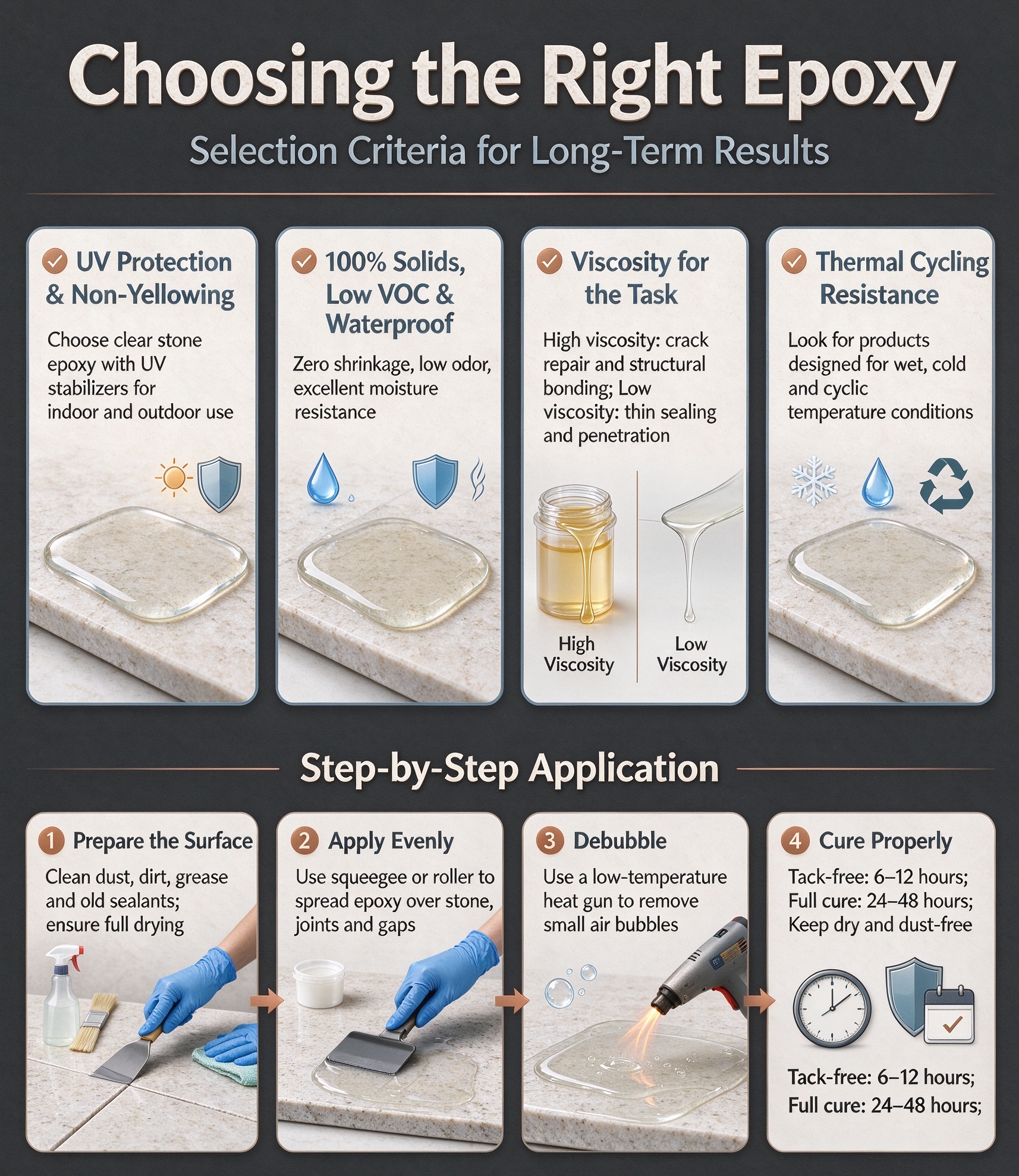
Choosing The Right Epoxy
One has to understand that not every type of epoxy is applicable for indoor and outdoor use. To guarantee good performance and avoid peeling and yellowing, one must choose appropriate stone epoxy materials by following the given specifications:
1. UV Protection and Non-yellowing
It is advisable to use transparent stone epoxy with UV protection as the one suitable for both indoor and outdoor applications. Regular epoxy becomes yellow and fragile when exposed to UV thus affecting the appearance of the stone. 100% Solids, Low VOC, and Waterproof
Dual-purpose stone epoxy is solid and has zero shrinkage and low VOC.In terms of ecological friendliness in terms of interior use and superior resistance against moisture effects in outdoor use, there are no harmful solvents contained in it. It is advisable to not make use of low solids and solvent epoxy, which undergoes shrinkage, bubbling, and reduced effectiveness while being used outdoors.
a. Ideal viscosity of the stone epoxy for a specific application.
– High viscous stone epoxy: Use in repair jobs and filling of cracks, joining of different elements, and working on uneven surfaces either outdoors or in case of structural damages.
– Low-viscose stone epoxy: Ideal for thin sealing layers while penetrating stones and other materials as applied indoors.
b. Possession of temperature and weather resistant qualities.
Choose the epoxy product specifically created for thermal cycling resistance and wet and cold conditions protection. The products having such certifications meet the standards of the stone industry and outdoor construction.
1. The proper use of the stone epoxy must be evaluated.
1. Stage 1. Prepare the surface, cleansing it up of any dust, dirt, grease, sealants, and anything else. The proper drying of the surface is necessary for avoiding bubbles and have the adhesion fixed properly.
2. Stage 2. Use a squeegee or a roller to make an even distribution of epoxy on the surface of the stones, joints, and gaps.Using Epoxy
1. Curing Conditions: Do the work in a shaded location to make sure the epoxy is not cured because of sunlight for outdoor works, and maintain the same temperature for indoor works.
2. Debubbling: Utilize the heat gun (very low temperature) to remove all small bubbles of air, resulting in a super-smooth surface.
3. Curing: Let the epoxy cure for the needed time, with tack-free curing demand of 6-12 hours and full hard curing requiring 24-48 hours. You must not walk over or wet it and expose it to dust during curing.
Tips for Lasting Effects
– Avoid doing the work when the temperature is below 10 degrees Celcius or above 35 degrees Celcius.
– In order to do better sealing, use a thin primer coat to penetrate porous stone, for example, travertine or marble.
– Refresh the topcoat every five to eight years.
– Make sure to avoid using abrasive cleaning materials for the cleaning of the epoxy-coated surfaces.
Popular Questions
1. Is it possible to apply it both indoors and outdoors?
Yes, the indoor outdoor stone epoxy was developed specifically for this purpose.
2. How long will it last?
The indoors last for 10-20 years and the outdoors 8-15 years when applied professionally and taken care of properly after it.
3. Does it change the initial appearance of stone?
No, high-quality clear stone epoxy improves the original color of the stone material without changing its texture. The satin finish products give a matte look and the gloss ones shine brightly.
4. Is it water-resistant for the pool area?
Yes, the fully cured indoor outdoor stone epoxy is waterproof.
5. Can everybody do it by themselves?
The proper information will guarantee the success, but it is better if professionals work on big patios.
Conclusion
In conclusion, stone epoxy for indoors and outdoors is the best and most cost-effective option you can use for protecting, repairing, or decorating your stone.

