
Epoxy for bonding stone and metal permanently

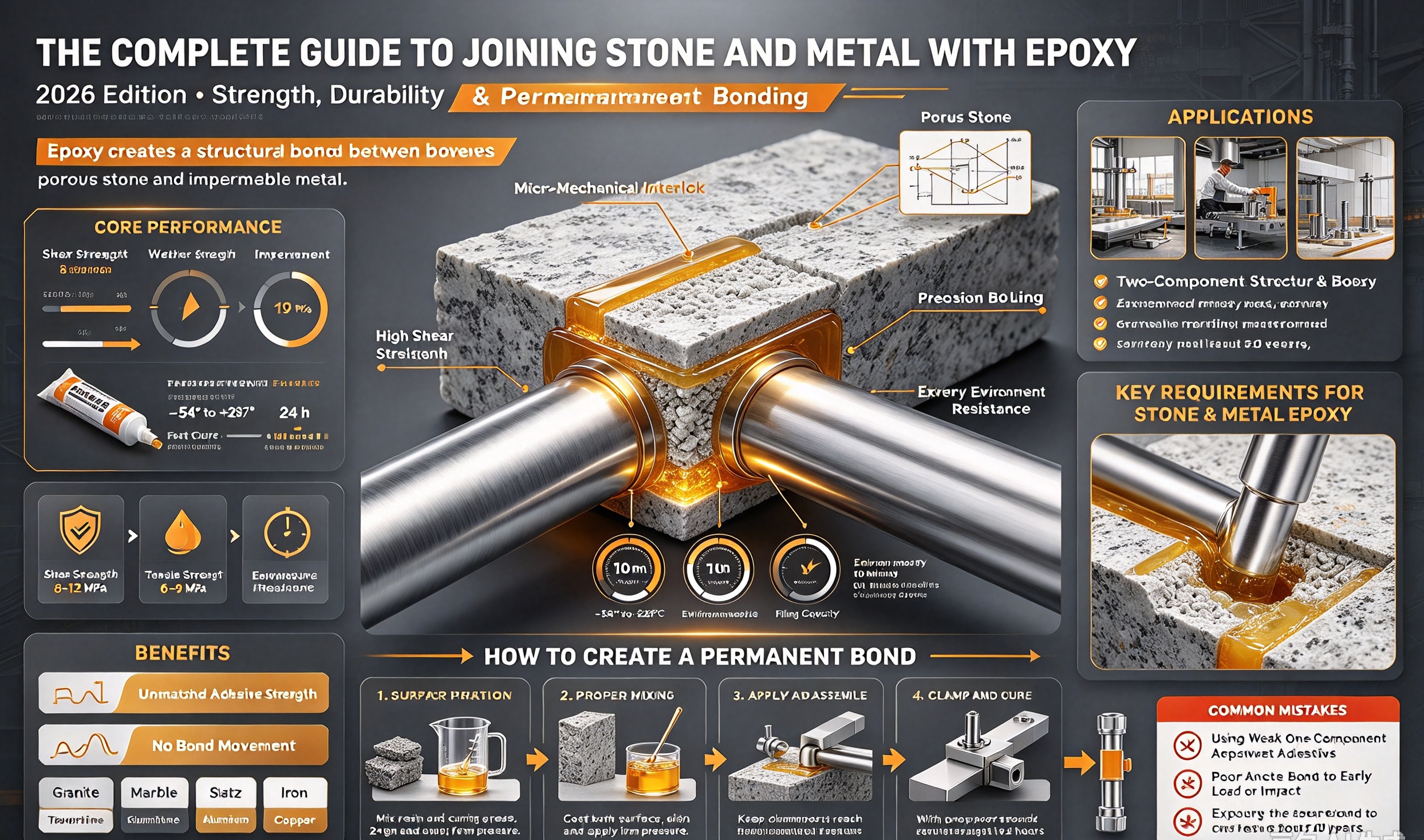
The Complete Guide to Joining Stone and Metal with Epoxy and Its Indestructible Properties of 2026
There is no comparable method to epoxy for bonding stone and metal, especially in terms of strength and durability. Unlike regular adhesive materials, silicone fillers, or building glue which degrade over time, epoxy establishes not merely very strong bond but happens to be strong and durable itself, as well.
Benefits of Epoxy as the Perfect Material to Create Long-lasting Stone and Metal Attachments
The fact is that stone and metal are two fundamentally different materials – the former is porous, fragile, and rough, whereas the latter is heavy, solid, and impermeable. Ordinary adhesives do not stand a chance of forming a bond between these two types of materials. As a result, such bonds often turn out to be so weak that they peel or break. Some unconventional adhesives have been invented that were designed exactly for this purpose – two-component structural epoxy with resin and curing agent, in particular.
– Unmatched Adhesive Strength: Epoxy for the joining of stone and metal shows shear strength from 8 to 12 MPa and tensile strength from 6 to 9 MPa when used to join steel and stone together. It is worth saying that epoxy can take a lot of stress compared to stone.
– Absence of Bond Movement: Instead of being flexible like other adhesives and stretching when in tension, edited epoxy can withstand pressure.- Excellent environmental resistance: High-quality epoxy can survive extreme temperatures (from -54°C to +287°C), acidic and basic environments (pH 3 to pH 11), high humidity, UV rays, oils, and commonly used organic solvents.
– Synergy with diverse materials: It can be used for bonding various natural and artificial rocks (e.g., granite, marble, travertine, quartz, slate, limestone) and various metals such as stainless steel, aluminum, iron, and copper.
– Filling capacity: The viscosity level of epoxy allows its use for surface moistening and penetration into the micro-pores of a stone or bonding materials.
Some areas of permanent stone-to-metal epoxy bonding technology application:
Permanent bonding technology involving epoxy has been utilized for construction, building, manufacturing, and restoration works when reliability and safety are required.
Metal anchors and pins, bolts are incorporated in the bases of appliances and monuments built with stone. Studies have shown that pins constructed with a good quality adhesive can be removed only through great efforts and destruction of the material.
Jewelry-making and precision gluing.
The modified polymer makes it possible to join various kinds of stones with metal parts of jewelry, thanks to its transparency and high strength.Main points for good glue for gluing stone and metal
The glue that is meant for gluing stone and metal must have the following necessities:
– Two-component glue: one-component glue cannot give enough tensile strength and endurance. It is better to use glue on the basis of bisphenol A;
– Weather and ultraviolet resistance; if the glue is going to be used outdoors, it should have UV-resistance;
– Waterproof qualities; the glue must be thoroughly dried in order to prevent the moisture from coming into the metals and stone and avoiding the formation of white mold of the glued surface;
– Quick drying time; the glue must be able to dry within 10 minutes and its properties should allow it to become strong in 24 hours. Instructions on how to permanently bond stone and metal epoxy A high quality of the epoxy product does not mean anything if it is not used properly. To achieve the strongest bond possible, it is important to follow these steps:
Step 1: Surface Preparation It is important to ensure that there is no dirt, dust, grease, oil, rust, wax etc on the surface of metal and stone to be glued. Ensure that the surface if smooth where necessary even polishing itStage 2: Proper epoxy mixing
Ensure that you mix the epoxy resin and also the curing agent according to the details on the packaging. Make sure to stir the mixtures accurately for about 2 to 3 minutes or until you can no longer see any streaks on the mixture.
Stage 3: Applying and Placing
Coat both surfaces with epoxy and as soon as both surfaces are smooth you can quickly stick both surfaces together. Then, place one part on top of the other applying pressure on these.
Stage 4: Fixing and Curing
Make sure to use clamps for keeping the surfaces in place while the glue is hardening. You should not start using the bond until the glue has been hardening for about 10 minutes and is completely cured in 24 hours. After gluing excessive glue will be removed both mechanically, which means that the surface should not be exposed to heavy load and pressure.
A couple of common misunderstandings that can lead to broke bond include using glues and one component epoxies that are not very effective (the glues can be easily damaged due to heat and pressure), improper surface cleaning in terms of removing all grease/dust from it so that adhesive can work properly, and much more.
Thus, there are usually a lot of questions regarding the use of glue between stone and metal. For instance, people often ask how long the bonds last. Usually, they last for about 20 years, if surfaces are prepared in the right way. Another common question is whether epoxy can be used for any metal and stone type. High-quality epoxy can be applied for any metal and stone types regardless of their type. One more question is whether epoxy is waterproof.

