
Waterproof glue for granite tiles

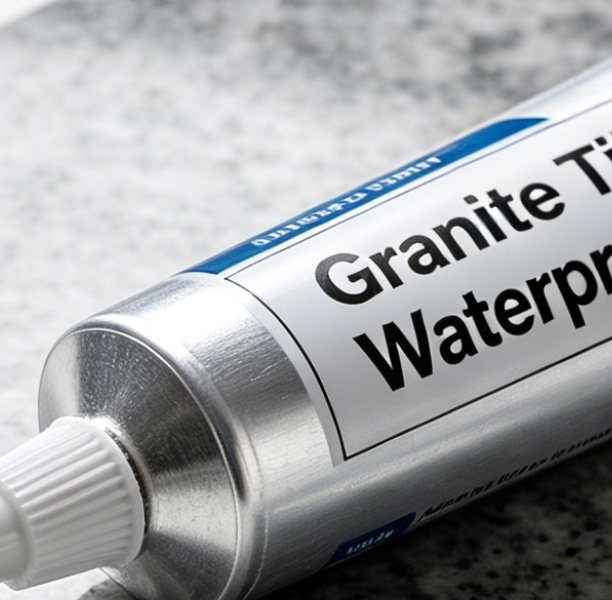
Granite Tiles Adhesive Development
Granite tiles waterproof adhesives were designed to keep the tile well affixed to a surface whether the surface is on a concrete, wood, or metal base as well as to prevent moisture from penetrating into the areas where the tile adheres to the adhesive. To do this, the adhesive needs to be able to carry the weight of the granite tile and remain secure to it despite the tile’s porous nature, employing force against it from the top side of the tile, under extreme conditions of humidity and weathering from both positive and negative sides of the granite surface.
A good adhesive for granite tiles will provide a good bond to the substrate; will be adequately flexible; will resist moisture (including beneath the surface); will withstand chemicals; will be UV stable; and will not permanently stain the surface of the granite.
Types of adhesives available for granite tiles, their uses, advantages, and disadvantages are as follows:
1. Two-Part Epoxy Adhesive
A common and versatile two-part epoxy is created by combining equal amounts of resin and hardener to produce a two-part epoxy that has been used in a broad range of industries.
Pros: High bond strength; high chemical, heat, and moisture resistance; ability to fill voids where adhesive meets the surface; ability to bond to different substrates; clear to retain natural beauty of granite.
Cons: Must mix components accurately; require long curing time (up to 48 hours); expensive; difficult to clean after use.
Best Use: For use with kitchen countertops and other kitchen surfaces; bathrooms and spas; and swimming pools. Suitable for heavy applications.
2. Polyurethane Adhesive
Flexibility and moisture resistance mean that polyurethane adhesive is suitable for outdoor applications and in any environment where humidity is greater than 80%.GRANITE TILE APPLICATIONS
Epoxy is a very popular adhesive for granite tile applications. Some of the pros associated with Epoxy include: strong bonding strength, excellent heat and water resistance, and universal acceptability of the adhesives. Some of the cons are: somewhat difficult to work with, slow cure time, and drying too fast.
Heavy duty applications (such as in a commercial kitchen) and applications that will be permanently installed outdoors are the best uses for Epoxy.
Polyurethane is an excellent adhesive and can be obtained in either a one-part or two-part kit. Polyurethane provides a vast variety of uses.
Some of the pros of Polyurethane adhesives include: high bonding strength, excellent heat/water-resistance, and adaptibility to other types of materials used in tile installation.
Some cons associated with Polyurethane adhesives include: less flexibility than two-part adhesives and a lower rating for heat and/or cold water resistance (one-part adhesives).
Heavy duty applications (such as in a commercial kitchen) and applications that are permanently installed outdoors are the best uses for Polyurethane.
Silicone is primarily used as a sealant for waterproofing granite tiles. Some of the pros of Silicone adhesive are: extremely flexible and durable, cures quickly, easy to use, and will adhere to non-porous materials.
Some of the cons associated with Silicone adhesive include: a low strength compared to other types of adhesives and should not be used in heavy-duty applications.
Sealing the edges of countertops, tile joints, and moving or abutted areas, such as when setting sinks and bathtubs, are the best uses for Silicone adhesive.
The Polyester Resin adhesive is also a very popular adhesive used for granite tile applications. Some of the pros associated with Polyester Resin adhesive are: easy to make resin adhesive; fast setting time; will fill imperfections in joints; good bond strength to masonry surfaces.
Some of the cons associated with Polyester Resin adhesives are: less heat and/ or cold water resistant when compared to Epoxy and Polyurethane adhesives.Best for: Indoor places and repairing damaged (chip or crack) tiles
5. Cement-Based Waterproof Adhesives
The low cost (thin-set mortar) for regular installations
Pros: Affordable, readily obtainable /easy to use, good performance in dry conditions, usable both indoors mummy & outside mummy
Cons: Not as strong as epoxy/polyurethane adhesive. The correct amount of water must be added so that the glue will remain waterproof.
Best for: Minimal use (under foot traffic) and low budget in tile applications indoors – typically only small pieces can be used as there is no further room for them.
To Choose the Best Waterproof Glue To Use On Granite Tiles
1. Environmental Considerations (indoor/outdoor), Amount of Exposure To High Humidity.
2. Use Epoxy Where You Do Not Intend To Submerge The Item – Temporary Submersion Products.
4. Use Adhesive That Is Suitable For The Surface(Metal Or Wood Uses Epoxy, Concrete Uses Cement Based/Epoxy).
5. Check The Rating Of Your Glue – Ensure It Is Not Going To Stain.
6. Make Sure The Curing Time Of The Adhesive Is Equal To Its Requirement For Your Wet Glue.
How To Use Waterproof Glue To Adhere Granite Tile
Applying Your Glue The Right Way Will Maximize Your Waterproof Adhesive Bond With Your Subfloor Underneath.
1. Preparing The Surface Before You Use Any Glue Will Give You Proper Bonding Strength; Clean & Dry Surface With A Mild Detergent (& DO NOT USE A HARSH CLEANER).
2. Level Up Any High Spots Once The Surface Is Cleared Of Its Surface Utilization. Once Finished You Can See The High Spots Where They Were Before.
3. If You Are Using New Porous Granite Make Sure You Apply A Primer First.Mix Two-Part Adhesive According To The Manufacturer’s Instructions (Use 1:1 Mix Ratio); Pre-Mixed Adhesives Are Ready To Use(Post-Mixed Adhesive)—Example: Silicone And Some Cement Based Adhesives.
Troweling And Install Tiles—Use Notched Trowels To Apply 3-5mm Of Adhesive On Both Surfaces When Installing Large Tiles And Create Horizontal Ridges On The Surface Of Each Tile.
Position Each Tile By Pressing Them Down Slightly And Then Turning Them To Adjust For Leveling Being Done By The Spacers. Using A Rubber Mallet To Tap Each Tile To Level, You Are Able To Continue Lightly Tapping Until You Have Positioned Each Tile Into Place. Once Positioned, Tile Can Be Adjusted For 15 To 20 Minutes.
Cure Tiles 24-48 Hours Prior To Any Load Or Foot Traffic. The Grout Between The Tiles May Be Installed After The Tiles Have Cured And Silicone Applied To Edges Of The Tiles.
Common Mistakes Made During Installation Of Granite Tiles
Not Preparing The Surface Correctly—Dust And Moisture Left On The Surface Prior To Applying Pressure To Glue Will Weaken The Bond Created With Glue.
Not Using The Correct 2-1 Mixing Ratio As Specified By The Manufacturer For The Use Of The Two-Part Adhesive.
Using The Wrong Type Of Adhesive To Install The Tiles In The Moisture Environment (Example—Do Not Use Polyester Adhesive On Shower Walls).
Taking Shorter Cure Times Than Necessary For Use Before Loading Weight Or Walking On Tiles.
Not Sealing The Grout And Edges Of Tiles Before Using.
Granite Tile Long Term Maintenance Tips
In Order To Preserve And Maintain The Bond Of The Glue To The Granite-Stone For Years To Amazon.com, Do The Following Basic Guidelines—
Regular Inspection And Repair, Immediately Any Damage Found To Either Adhesive Or Grout.
Regularly Clean Surface With A Non-Abrasive Cleaner (Do Not Use Any Strong OR Harsh Cleaners).
Reapply Outdoor Silicone Every Yearor Two.
Never Drag Heavy Objects Onto Or Across Your Granite Tile.
In Conclusion
Select Your Waterproof Glue Based On The Intended Use Location And Type Of Surface, Along With The Length Of Time You Expect The Glue To Last Before You Need It. To Provide Waterproof Glue Installation, Follow Best Installation Practices From The Start, And Use The Best Maintenance Techniques For The Installer’s Method For Restoring Adhesive Using For Granite-Stone Tile To Achieve A Long Lasting, Permanent Waterproof Installation! Always Focus On Quality Over Cost. When You Think About Installing Granite-Tiles Later, You Will Be Forced To Reinstall Due To Your Cheap Choices Made Initially.