
Granite epoxy for long term repair

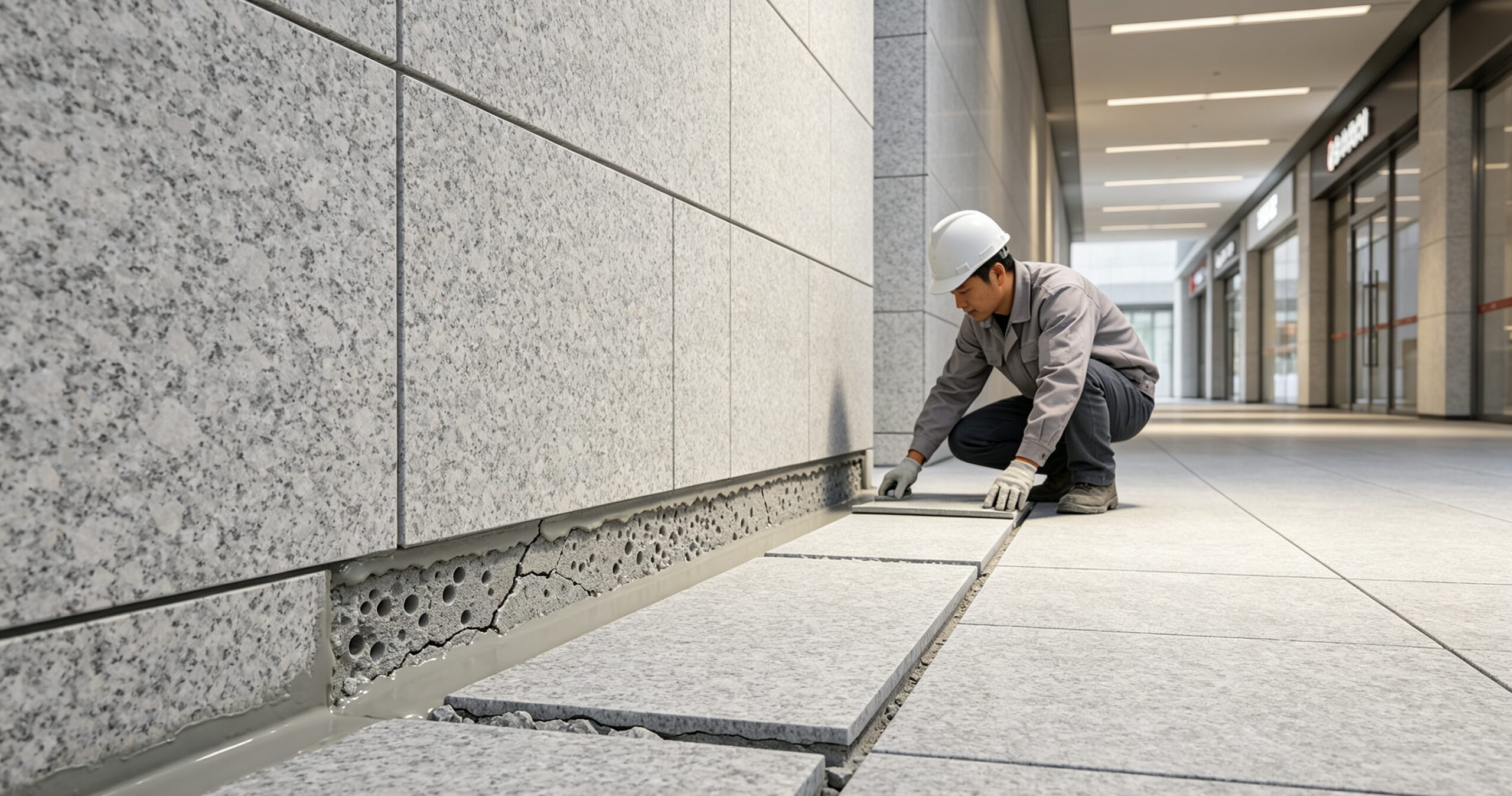
Granite Epoxy for Long-Term Repair: Professional Principles, Material Selection and Specifications for Construction
Granite, because of its density and resistance to abrasion, has been applied extensively in residential counter tops, commercial wall lapping, paving and as a monumental stone. Over the years granite is susceptible to defects in form of cracks, chips, joint gaps and flaking because of thermal expansion, impact, chemical corrosion and aging process. Conventional repair materials such as putty, ordinary glue and polyester resin possess low adhesion properties, low performance in resistance to weather and fading, hence can therefore not be relied upon for durability. Among the kinds of granite repair systems available today, granite epoxy system is one of the well-known systems rated for permanent restoration of granite because of its unique bonding ability and good environmental stability. In this article, the authors look at how epoxy works, what to look for in selecting epoxy materials, the construction techniques employed and maintenance techniques to use after restoration.
It should be noted that epoxy differs from ordinary repair materials, where the latter consists of two components: epoxy resin and curing agent, in addition to functional agents like strengthening agents, stabilizers alongside anti- yellowing agents.The bonding strength is significantly more than the tensile and compressive properties of granite, thus locking the loose pieces of granite in place, patching up cracks on granite surface and strengthening slab joints. It can resist daily wear and tear, location-specific impact and minor deformation of structure, thus preventing any future crumbling and flaking of the material once it has been repaired. Professional nano-strength epoxy products can offer rock-solid curing effect matching the strength of granite stone.
In addition, granite epoxy has very good environmental and chemical stability. Good granite epoxy is developed to resist water penetrating into it, extreme temperatures, household chemicals and UV rays. It has zero absorption of water after being cured, which means that all kinds of moisture, oil stains and chemical elements are isolated from penetrating into the material thus preventing darkening and blistering of repair job. The anti-yellowing agents used in granite epoxy prevent yellowing and discolorThe epoxy has the ability to fill tiny gaps and micro pores in the stone and achieve better flatness of the stone slab apart from improving the aesthetics and anti-fouling properties. The long term effectiveness of granite repair is highly dependent on the choice of materials for the granite repair job. Use of the wrong epoxy for the wrong type of defect will result in a need to replace the installation as the epoxy used in the repair process will become ineffective. The following is a look at the criteria for choosing the right epoxy based on the type of defect being repaired.
There are different types of repair epoxy for different kinds of defects including fine cracks and micro pores. The most suitable epoxy for repair of microns and fine cracks is the low viscosity penetrating epoxy that works best for micro pores and fine cracks. The low viscosity epoxy is able to penetrate all the way through the capillary spaces in the granite, filling up all the existing gaps and forming a solid repair without any air pockets. In cases where there exists large sections of stone that need repairs, high viscosity structural repair epoxy should be used. This type of epoxy has good thixotropic properties which do not allow it to flow down during the repair process and according to the manufacturers it can cure to a very strong structure that can be able to withstand high forces.
The environment ensures that the correct epoxy is used in the repair job. For example, for kitchens, heat resistant, oil proof and low odor epoxy is required for permanent repair solutions in kitchens and stone tops.