
Strong stone glue for construction

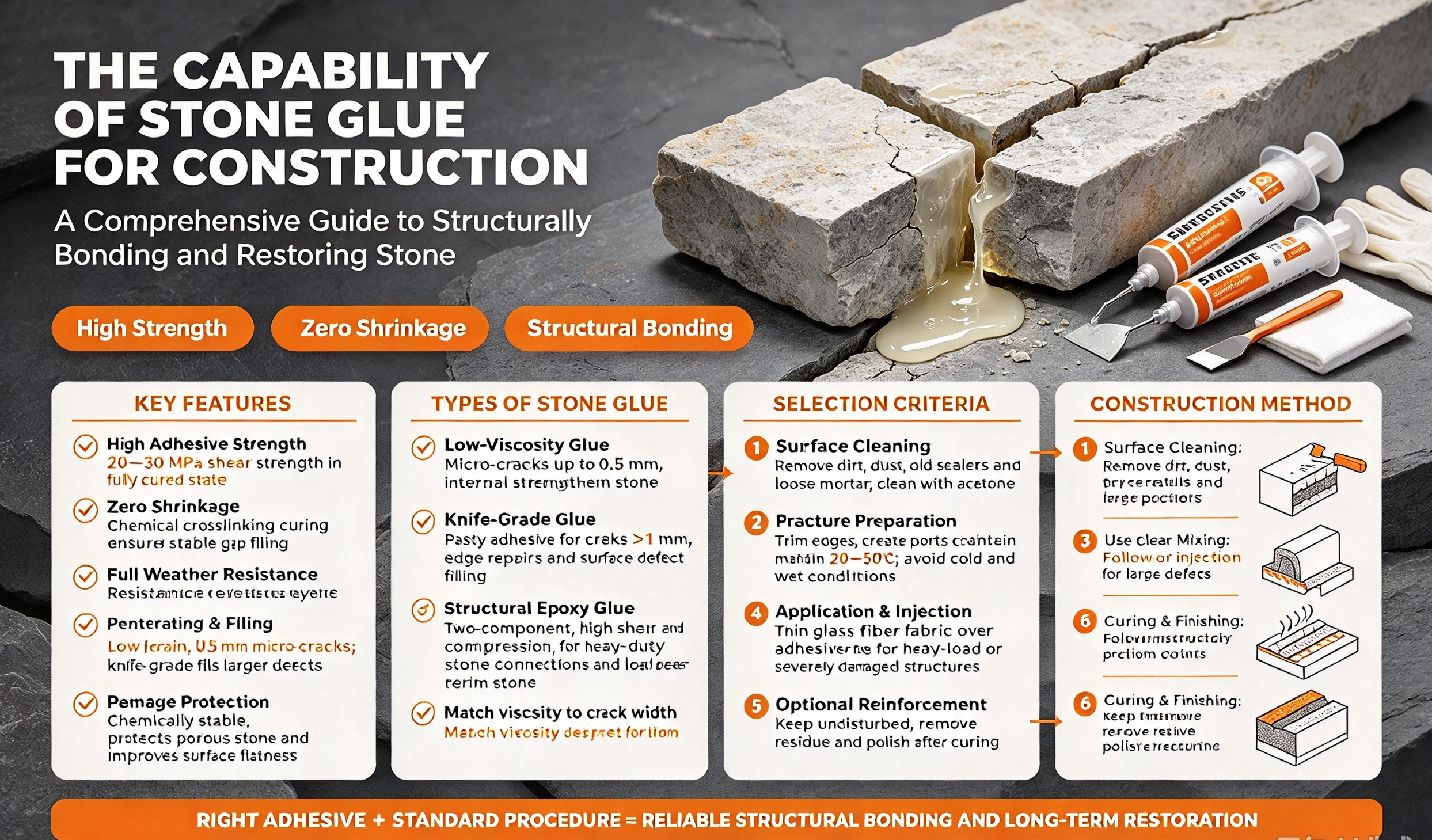
The Capability of Stone Glue for Construction: The Comprehensive Guide for Structurally Bonding and Restoring
Some phrases: The strength of stone adhesive for construction, high strength stone glue for construction, stone bonding adhesive, durable stone glue for construction.
In the current construction and masonry works, natural and artificial stones are widely applied to some sections of buildings, countertops, pavements, retaining walls, other decorative constructions etc. Usually cement mortar, common sealants, and adhesives are bad options as they do not provide the needed strength of the joints.
Special stone adhesive (or stone glue) is designed for the purpose of bonding and repairing stones and is distinguished by its incredible bonding capability, zero shrinking, high resistance to bad weather, and great stability.
This guide explains the properties of stone glue, the types of glue made of stone, the way stone glue can be selected, the methods of usage, and the suggestions on avoiding mistakes.
Features of High Quality Strong Stone Adhesive for Construction are made with regard to structural load of construction works and outdoor usage. Its function fully meets the requirements of architectural masonry engineering and has its advantages in comparison with traditional bonding means:
1.1 High Adhesive Strength
Good quality stone glues (mostly two-component structural epoxy glues and good polyurethane stone glues) have high tensile and shear strength characteristics.Upon full curing, shear strength being about 20-30 MPa is much higher than that of standard glue or cement. Due to its strong bonding capabilities, this glue is excellent for gluing heavy stone slabs together, building vertical stone facades or making structural stone components, as it has the ability to withstand static loads, dynamic shocks and outside vibrations.
1.2 Zero shrinkage and constant structural stability
Unlike multiple one-component glues and solvents, which shrink during the curing process making the glue capable of filling up to 80% of joint thickness, the specialized stone glue employs curing technology based on the principles of chemical crosslinking which leads to the total absence of curing shrinkage. The main advantage of this technology is its ability to fill holes and gaps of every size, ensuring reliable bonding over a long period of time.
1.3 Complete weather resistance indoors and outdoors
The stone constructions are influenced by different weather elements such as rain, sunlight, temperature differences and freeze-thaw cycles.Adhesives designed for stone construction will be resistant against the above-mentioned issues because of the modifications they made in order to increase their resistance to water, UV rays, chemicals and high temperatures. It will not turn yellow, crack, melt or flake due to long-term exposure to weather and be employed for many different construction purposes such as construction of stone exterior walls, stone paving or stone landscaping also under humid conditions as in bathroom and kitchen facilities.
1.4 Incredible Penetrating and Filling Properties
Construction adhesives for stones are available in two packages which are either thin viscosity or high viscosity knife glue. Thin viscosity adhesive has high capillary effect that allows it to enter even small crack (up to 0.5 mm) of the stone for internal reinforcement, while high viscosity adhesive is excellent at filling big cracks, gaps and holes in stones in order to perform perfect repair without losses of the filling materials.
1.5 Protection from Damage
Good construction glue for stone has constant chemical properties which means that it will not ruin the porous structure of the weak natural stone.The adhesive can only achieve enhanced gloss and flatness and nothing else. Kinds of Strong Stone Glue and Their Application
Modern strong stone adhesive can be classified into three types that refer to the type of material, viscosity, and purpose of use because the type of glue chosen should be appropriate for concrete situations encountered in engineering and the type of stone defect.
2.1 Low-Viscosity Strong Stone Glue
Low viscosity and good capillary imaging features of this glue give it the advantage of being used for fixing micro-cracks (up to 0.5 mm wide), internal strengthening of loose stone structure, and filling the gaps between stones. In addition, its low viscosity enables penetration to the inside of stone to avoid moisture penetration and ensure prevention of micro-cracks through external factors. It is used in the construction of historic antique structures, premium class walls, and other constructions made out of high-quality stone materials.
2.2 Knife-Grade Stone Glue
The knife-grade strong stone adhesive is pasty in texture and one of the most commonly used adhesives in the construction process. It is useful for repairing and joining stones with the medium span of cracks (at least 1 mm wide) occurring in stone edges and surfaces. It is applied with the help of a knife due to its high adhesive layer and excellent bearing capacity.2.3 Structural Epoxy Stone Glue
Considered the most sophisticated and effective glue type for stone, the two-component epoxy stone glue possesses high shear and compression loading properties. Thus, the product has been specially designed for heavy-duty stone construction work, large stone connections, restoration of damaged stone sections, along with reconstruction of missing stone materials. The product is most suitable to be applied in the main constructions of buildings and dry-hanging stone for external walls, stone bearing walls, and stone constructions for landscape retention.
3. Criteria for Choosing Strong Stone Glue for Construction
A wrong choice of stone glue is considered the main reason for construction problems, such as peeling, cracks, and bad load-bearing properties. In order to make the right choice of glue, it is necessary to use the correct products according to the engineering conditions, type of stone, number of defects, and the required load-bearing ability:
– Pick glue that is suitable for stones only. It is not recommended to use universal glass glue, decorative glue, or cheap glue instead of special stone glue. Universal glue will not be able to comply with the necessary requirements of the physical and chemical characteristics of the stone.The elements that act as carriers should conform to strength standards: The dry stonework structures of the wall stone and big paving stones should possess adhesive elements that exhibit shear strength capabilities that exceed 20 MPa.
– Apply clear adhesive on antique and premium stones: If it is required to repair antique stones or use premium ones, then a clear and color-stable adhesive should be used.
– Make sure that consistency corresponds to the width of cracks and gaps: For minor cracks in stone, a liquid adhesive with low viscosity is chosen, with knife-grade adhesive used to fill larger cracks and defects.
The Verified Construction Method of Effective Stone Adhesive Bonding and Repair.
Stone adhesive can demonstrate high performance only if properly utilized in the standardized procedure of construction. The technique of construction with stone adhesive consists of the following procedures:
Procedure number one: Complete surface cleaning.
Ensure that all dirt, dust, old sealing materials, and loose mortar are removed from the surface with the help of appropriate cleaning tools and materials. Remove dust from the crack, wash the bonding site with acetone in order to remove any oil and dirt to obtain rough, clean, and dry bonding surface.Stage 2: Treatment of fractures and space
In case of an open fracture, the edges of the fracture have to be roped off to take away the unwanted stones. In the case of deep fractures and invisible voids, suitable ports must be made to make the filling of glue and removal of air easier.
Stage 3: Proper mixing of glue
The glue comprising two components must be mixed in accordance with the recommendations. Also, it is essential to maintain the temperature during the mixing of glue within the range of 20-50 degrees Celsius and avoid mixing the glue in chilly and wet conditions.
Stage 4: Application of Glue and Injection Adhesion
As applied to small micro-cracks, glue must be covered with a small layer to achieve automatic absorption and sealing. In the case of medium and wide fissures, the glue should be evenly distributed and pressed hard to let the air escape from inside. With respect to deep and large area defects, multi-port serial injection should be used for better sealing.
Stage 5: Additional reinforcement (Option)
For large-scale stone structures subject to heavy loads and composed of severely damaged components, it is required to lay glass fiber fabric on top of the glue in order to strengthen the stone and increase its stability in terms of the possibility of cracking again.
Stage 6: Curing and surface finishing
Stone constructions have to stay in still conditions during curing according to the guidelines. After the glue has cured, nozzles and residue of glue should be removed, and polishing of the surface should be performed in order for it to look as before.

